Confucius Institute
Tribhuvan UniversityKirtipur, Kathmandu
Kirtipur, Kathmandu
Pokhara, Nepal – March 24, 2025
In a significant step towards strengthening educational and cultural ties, the Confucius Institute at Tribhuvan University (CI@TU) and Janapriya Multiple Campus (JMC) signed a Memorandum of Understanding (MoU) today. The agreement, signed at JMC’s seminar hall in Pokhara Metropolitan City, marks the launch of Chinese language classes for the Bachelor in Mountain Tourism Management (BMTM) program.
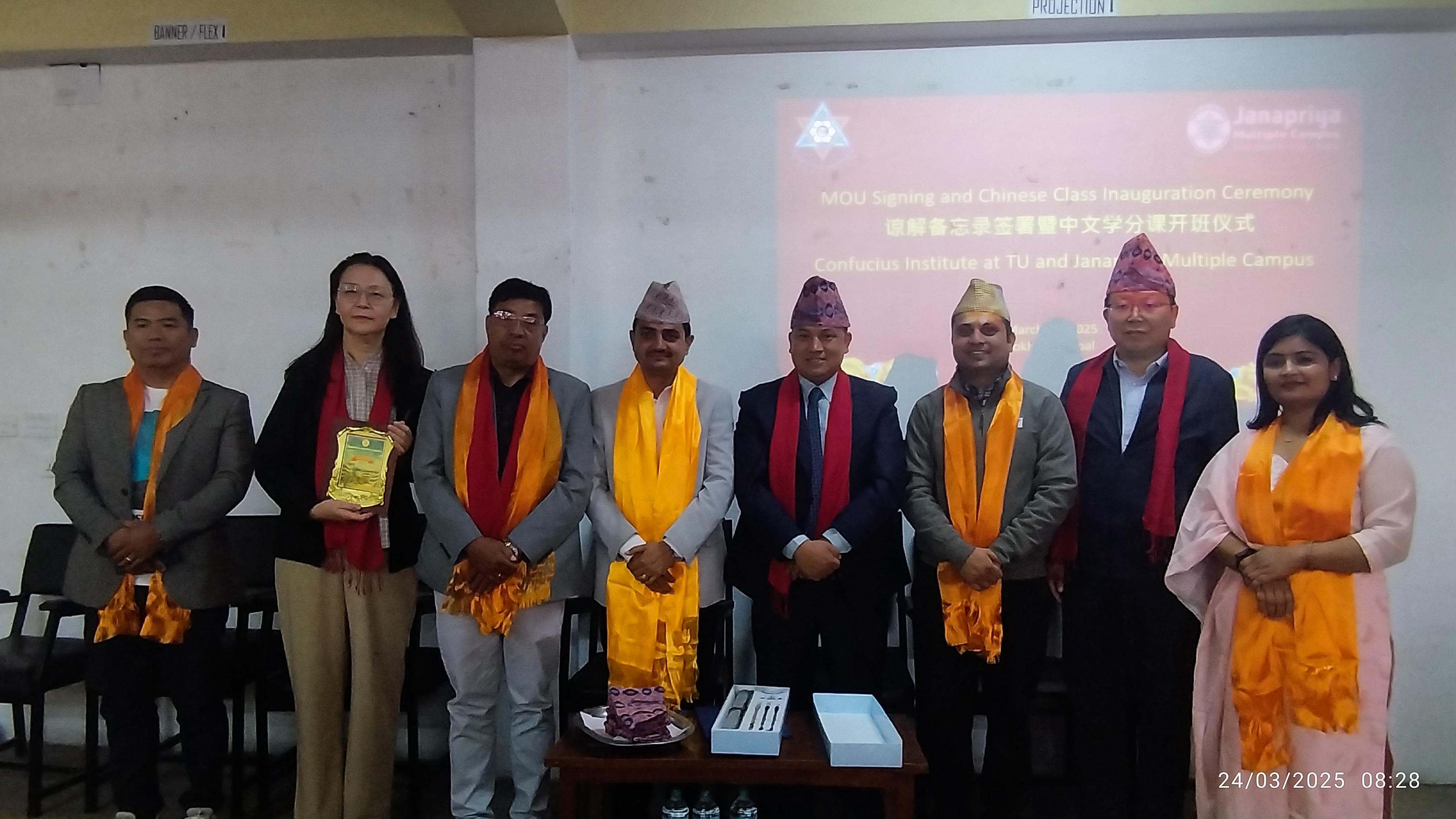
The MoU was signed by Dr. Bal Ram Duwal, Nepal-side Acting Director of CI@TU, and Krishna Babu Baral, Campus Chief of JMC. The event highlighted the growing importance of Chinese language education in Nepal, particularly in the fields of tourism, business, and cultural exchange.
Dr. Bal Ram Duwal, in his address, emphasized the transformative power of language. “Language is not just a means of communication; it is a bridge that connects people, cultures, economies, and civilizations. As China’s global influence continues to grow, learning Chinese opens up vast opportunities in education, business, tourism, and diplomacy. For Nepalese students and professionals, this is an investment in the future,” he said. He also highlighted the shared vision of the MoU to equip students with essential language skills that will enhance their academic and career prospects.
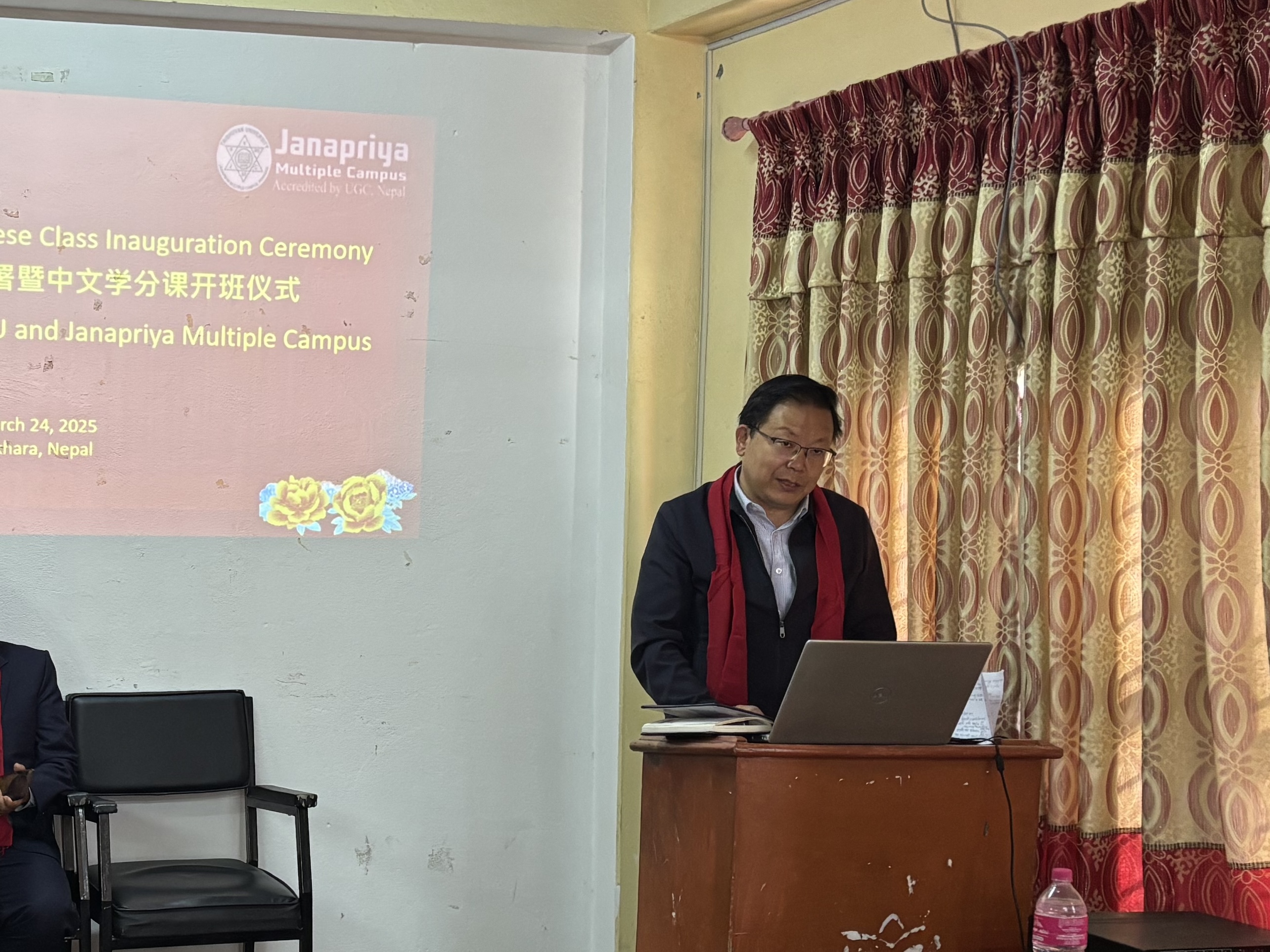
Prof. Dr. Zhang Xingnian, China side director of CI@TU, expressed gratitude to JMC for their warm reception and support. “Mastering the Chinese language is like holding the key to unlocking tourism cooperation between China and Nepal. This partnership reflects our enduring relationship, built on mutual respect and cooperation over the past 70 years,” he said. He also noted that year 2025 marks the 70th anniversary of modern diplomatic relations between Nepal and China, making the MoU a timely celebration of this milestone.
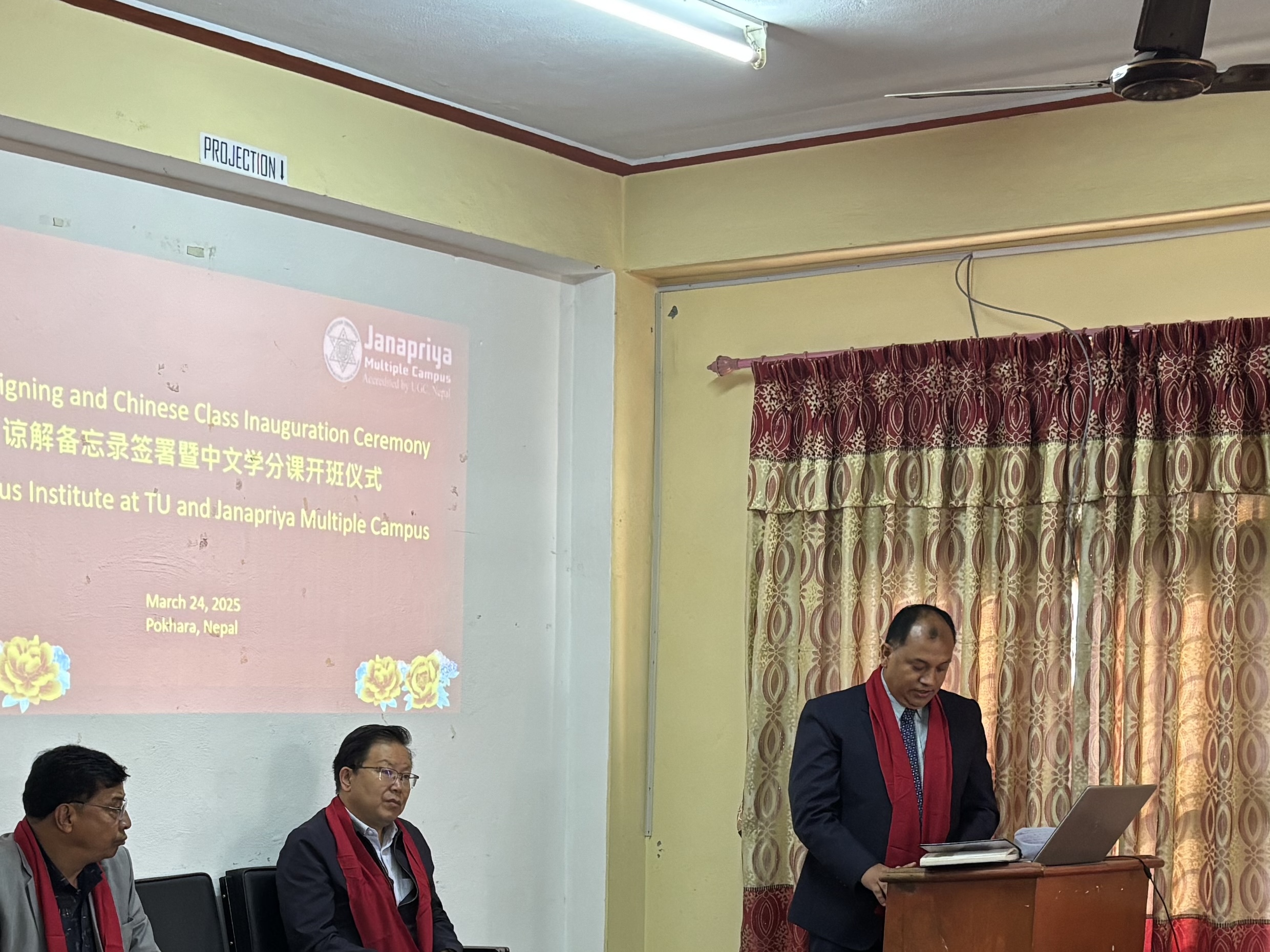
Birendra Narayan Bijukchhen, Chairman of JMC’s management committee, highlighted the deep historical and cultural connections between Nepal and China, dating back to the 7th century. “This MoU is more than an academic agreement; it is a bridge connecting our institutions in a shared mission of education, cultural exchange, and professional development,” he said. He also expressed a commitment to fostering collaboration with universities in China and Nepal.
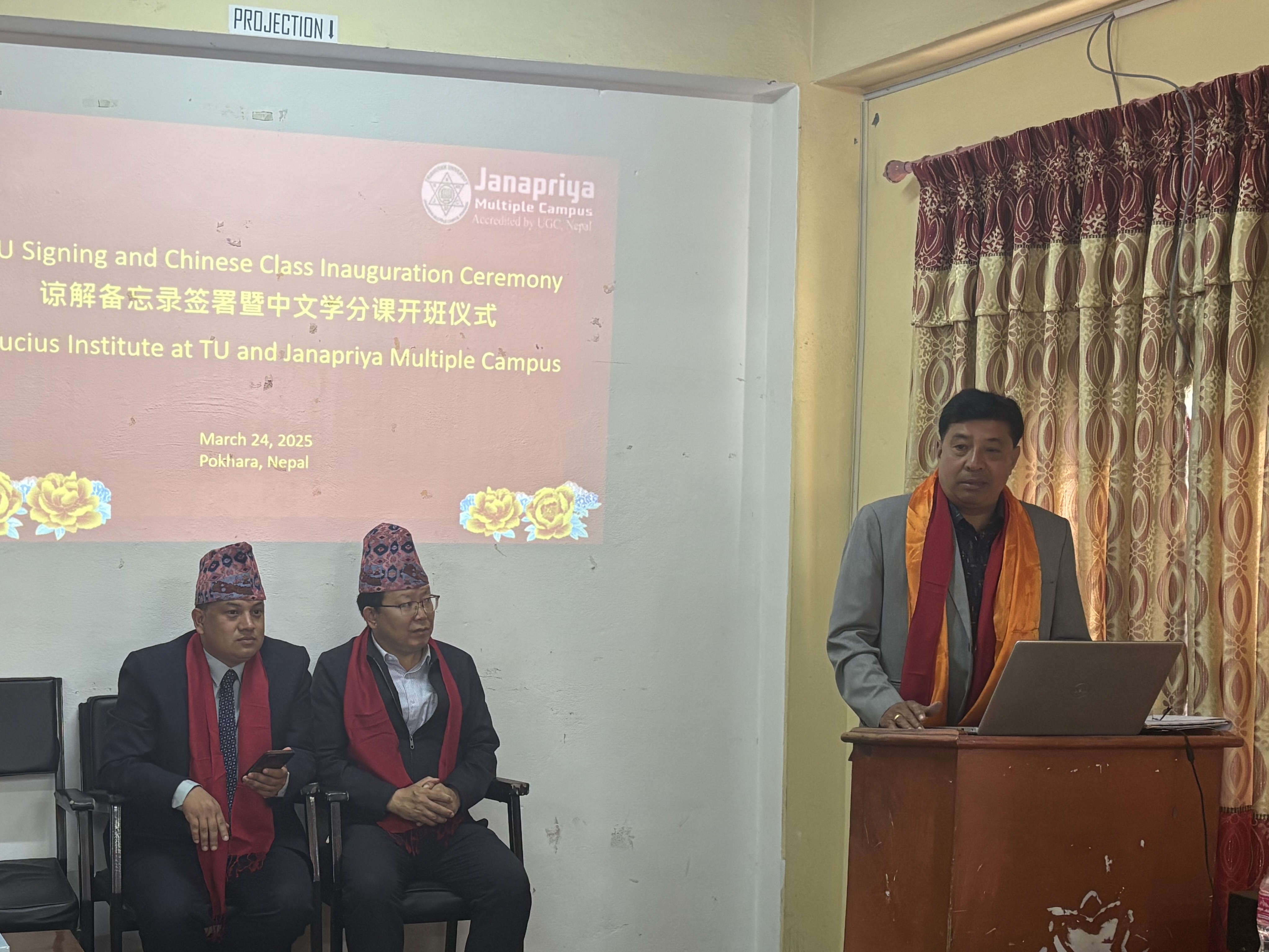
Krishna Babu Baral, Campus Chief of JMC, announced the immediate start of Chinese language classes for the 7th and 8th semesters of the BMTM program. He expressed gratitude to CI@TU for their cooperation and committed to expanding Chinese language courses to other disciplines in the future. “This partnership will open more job opportunities for our students,” he added.
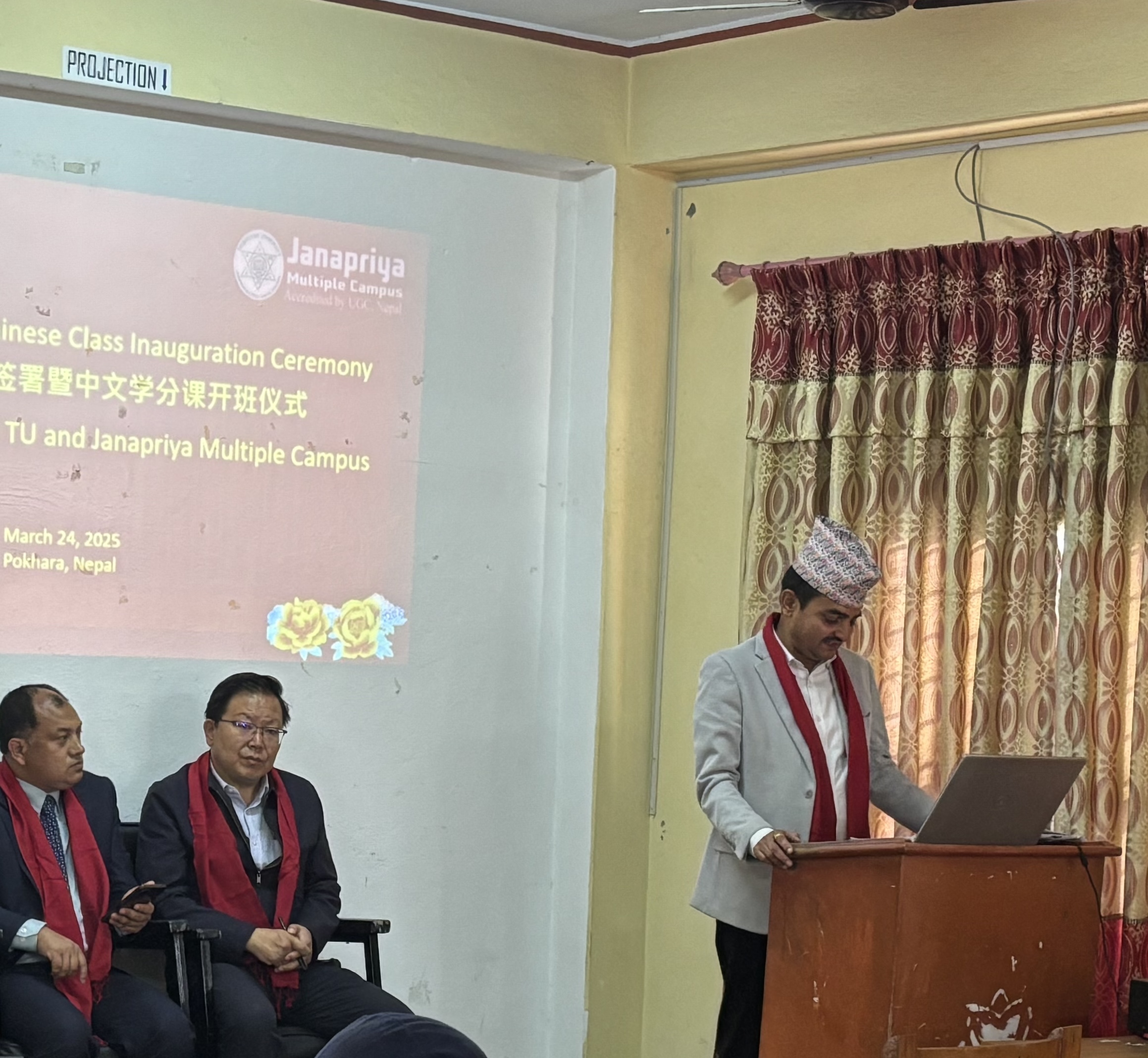
Yao Fang, the Chinese language teacher, provided details about the course structure and learning activities. “With our joint efforts, I believe everyone will make progress. Let’s work hard together,” she said.
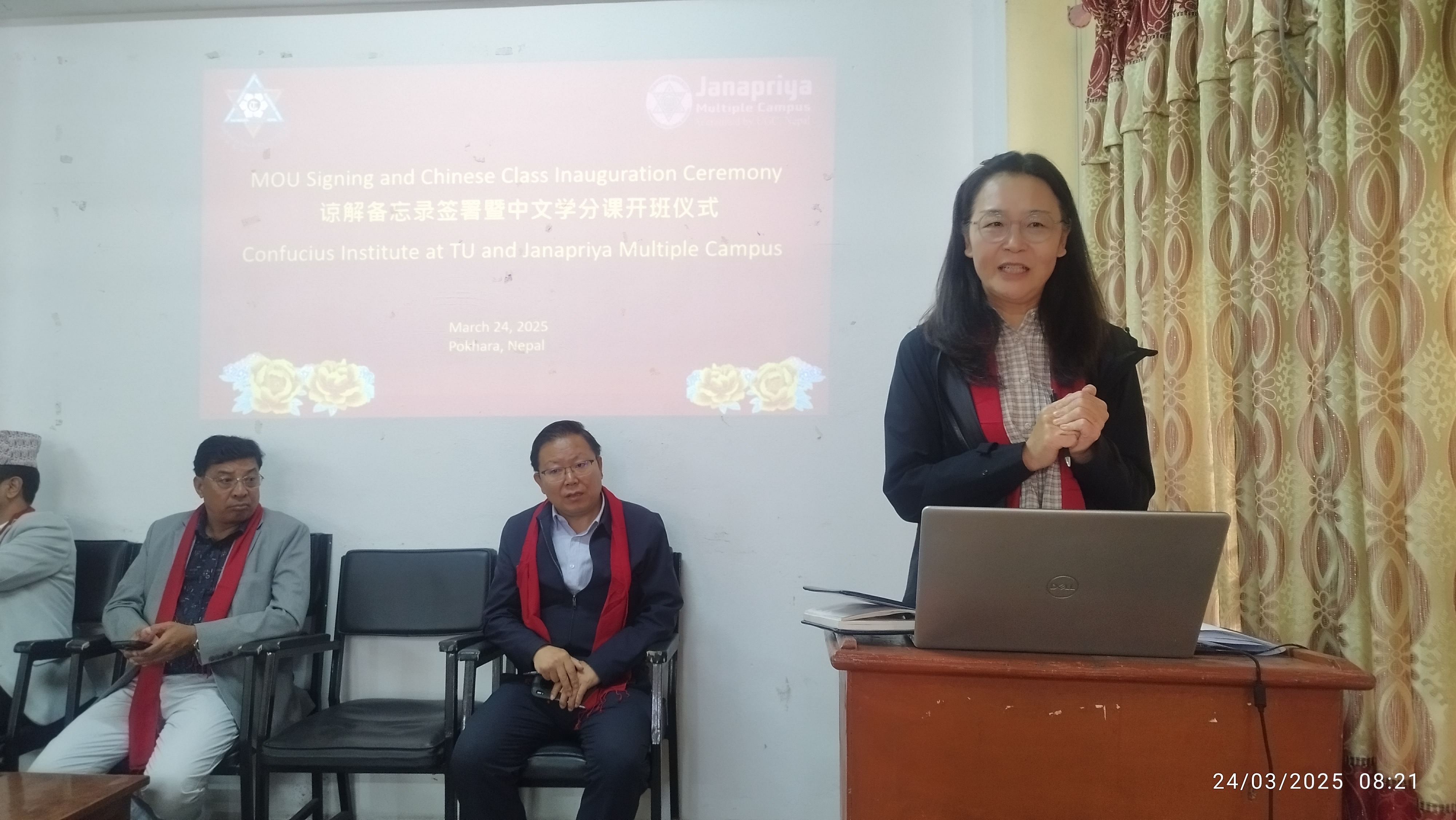
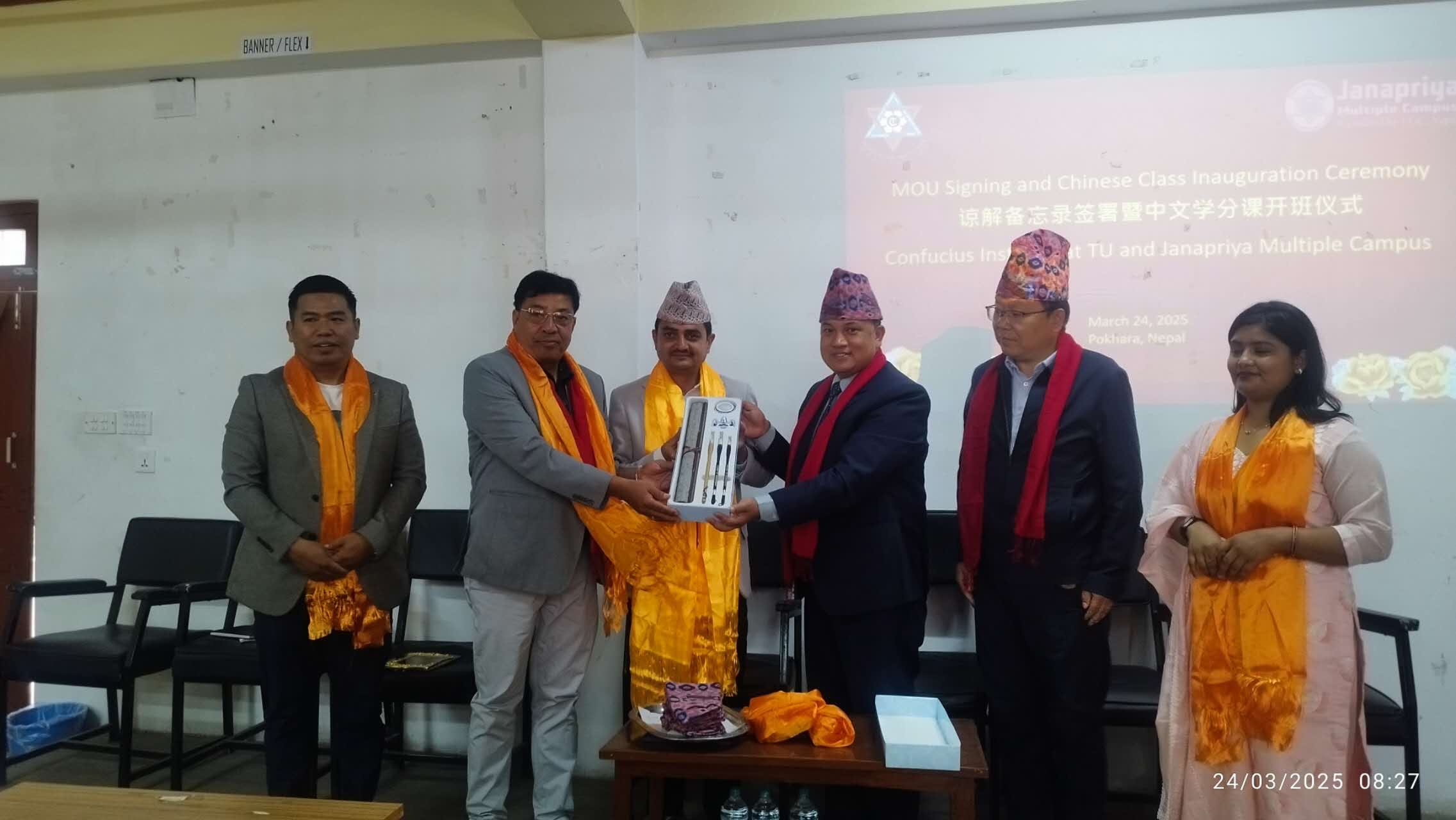
The autonomous program coordinator of JMC Ms. Divya Laxmi Chalise has also highlighted the importance of Chinese language in the contemporary context. The event concluded with an exchange of gifts between CI@TU and JMC, symbolizing their commitment to mutual growth and collaboration.
About CI@TU and JMC
The Confucius Institute at Tribhuvan University (CI@TU) was established in 2020 through a collaboration between Tribhuvan University, East China University of Technology (ECUT), and Qinghai Minzu University (QMU). It is dedicated to promoting Chinese language education and facilitating academic exchange.
Janapriya Multiple Campus (JMC), founded in 1990, is a community college of Tribhuvan University and is accredited by the University Grants Commission of Nepal. With over 3,700 students in management, education, and science streams, JMC has been a leader in providing high-quality education in business, management, and tourism.